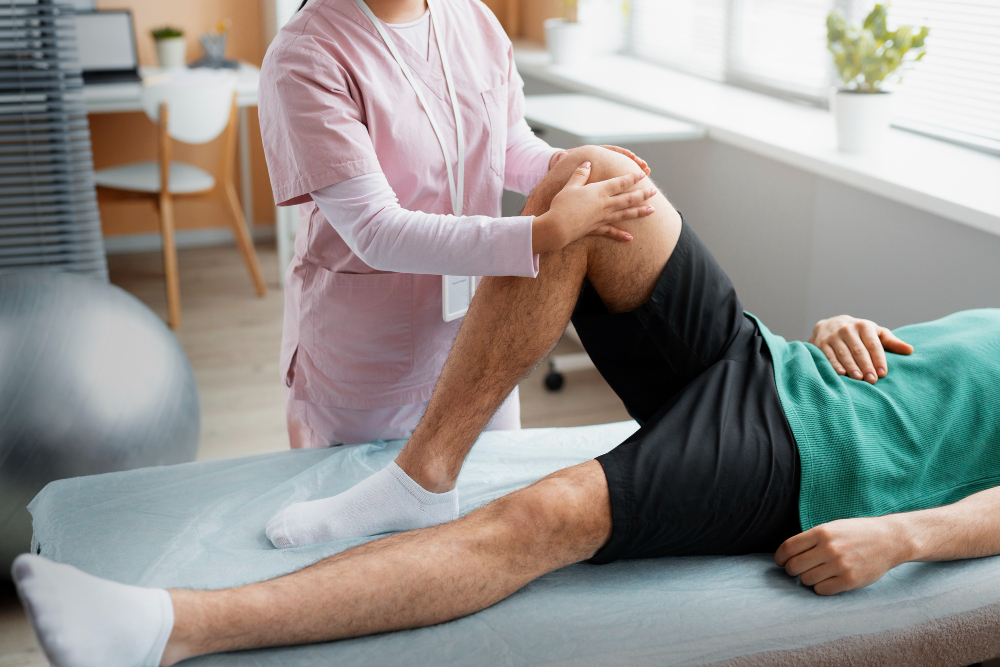
Knee replacement recovery is a journey that needs careful planning. After total knee replacement (TKR) surgery, rehabilitation plays a key role in healing. Rehab after TKR helps you regain strength, movement, and confidence. In fact, physical therapy for knee surgery is often the most important step for a full recovery. Without proper rehab, you may face pain, stiffness, or even long-term problems. Therefore, understanding the process can help you get back to your daily life faster and safer.
What Is Knee (TKR) Replacement?
Knee replacement, also called total knee replacement (TKR), is a surgery to replace a damaged knee joint. Doctors remove the worn-out parts and put in artificial parts made of metal and plastic. Usually, this surgery is done for people with severe knee pain or arthritis. As a result, many people can walk better and enjoy less pain after TKR. However, surgery is just the first step. Recovery depends a lot on what you do after the operation.
Why Is Rehabilitation Essential After TKR?
Rehabilitation is not just helpful; it is necessary after knee replacement. Right after surgery, your knee is weak and stiff. But with rehab, you can:
For these reasons, doctors and therapists always recommend starting rehab as soon as possible. According to the CDC, early movement after surgery lowers the risk of complications.
Key Stages of Rehab After Knee Replacement
Rehab after TKR happens in stages. Each stage has its own goals and exercises. Let’s look at the main steps:
Throughout these stages, your rehab team will guide you. They adjust your plan based on your progress.
Common Rehab Exercises and Techniques
During knee replacement recovery, you will do many simple exercises. These help your knee heal and get stronger. Some common rehab exercises include:
In addition, your therapist may use ice, heat, or gentle massage. Sometimes, special machines help you move your knee safely. Always follow your therapist’s advice for best results.
Benefits of Proper Rehabilitation
Proper rehab after TKR offers many benefits. For example, you can:
Moreover, studies in medical journals show that people who follow rehab plans recover faster. They also have fewer long-term problems.
Tips for a Successful Recovery at Home
Once you leave the hospital, home care is very important. Here are some tips for a smooth recovery:
With these steps, you can make your recovery easier and safer.
Preventing Complications Through Rehab
Rehab after knee replacement also helps prevent problems. For instance, regular movement lowers the risk of blood clots. Good exercises keep your knee from getting stiff. In addition, following your rehab plan can stop infections and falls. If you notice redness, swelling, or fever, call your doctor right away. Early action can prevent bigger issues.
In summary, rehabilitation is the key to a strong and healthy knee after TKR. Every step you take in rehab brings you closer to normal life. For the best results, consult Dr. Rahul Shyam for personalized recovery guidance after knee replacement surgery.