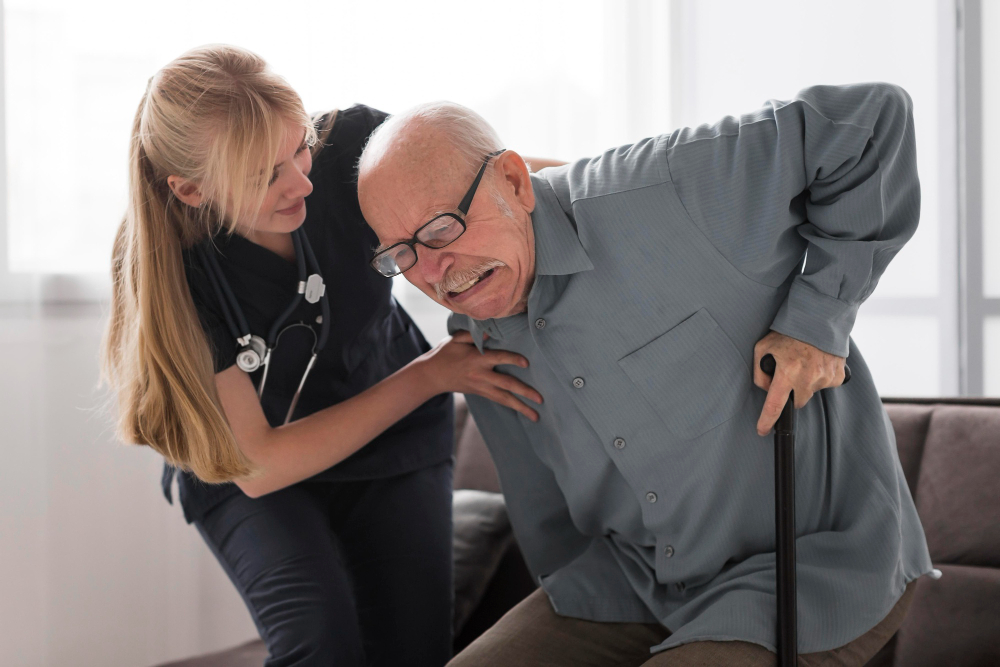
Posture problems and falls in the elderly are common concerns for seniors and their families. As people age, they often face changes in balance, muscle strength, and posture. These changes can increase the risk of falling. In fact, the CDC reports that one in four adults over 65 falls each year. Because falls can lead to serious injuries, understanding posture correction for seniors and fall prevention in elderly people is very important. This blog will explain the causes, signs, and solutions for posture problems and falls. We will also share tips for prevention and rehabilitation, including physiotherapy for elderly falls.
Understanding Posture Problems in the Elderly
Posture problems mean the body is not aligned in a healthy way. As a result, seniors may stand or sit with a bent back or rounded shoulders. Common types of posture problems include:
With age, bones and muscles become weaker. Therefore, it is harder to keep a straight posture. In addition, joint stiffness and loss of flexibility can make movement difficult. Over time, these changes can affect balance and increase the risk of falling.
Why Falls Happen
Many factors can cause falls in older adults, especially when posture is poor. Some major causes include:
Because these risks add up, it is important to address posture correction for seniors and make the home safe.
Recognizing the Signs
Early signs of posture problems or fall risk can help prevent injuries. Watch for these symptoms:
If you notice these signs, it may be time to seek help. Early action can make a big difference.
Diagnosis and Assessment
Healthcare professionals use several methods to diagnose posture problems and assess fall risk in older adults. First, they may ask about recent falls or changes in movement. Next, they will check posture, balance, and muscle strength. Sometimes, they use special tests like the Timed Up and Go (TUG) test. In some cases, doctors may order X-rays or bone scans. These steps help create a safe and effective plan for posture correction and fall prevention in elderly people.
Treatment and Rehabilitation
Treatment often includes physiotherapy for elderly falls. A physiotherapist can teach exercises to improve strength, balance, and posture. Common approaches include:
In addition, group classes like tai chi or gentle yoga can help. These activities improve balance and confidence. Regular practice is key to seeing results.
Prevention Tips
There are many ways to prevent falls and improve posture in seniors. Try these tips:
Because prevention is easier than treatment, these steps can help seniors stay safe and independent.
When to Seek Help
If you or a loved one has frequent falls, trouble walking, or new posture problems, do not wait. It is important to consult a physiotherapist or healthcare provider. They can offer a full assessment and suggest the best plan for posture correction and fall prevention in elderly people. Early help can prevent injuries and improve quality of life.
Consult a physiotherapist or healthcare provider like Dr. Rahul Shyam for personalized advice on posture and fall prevention.